Tips & Tricks
Cracks on rear axle suspension
The older models had a single axle-body as the rear axle, which was sprung by means of a parallel rocker. Cracks have often appeared on this swing arm, which have even led to the complete loss of the axle.
The images below show where these cracks occur.
The precautionary use of reinforcement plates seems advisable.


Coupling for main drive
The main drive clutch on all forage harvesters is exposed to significant heat stress due to the unavoidable minimal slippage of the power belts. On Krone forage harvesters, as with most other manufacturers, the main drive clutch is hydraulically actuated via the low-pressure hydraulic system.
Ultimately, this clutch is nothing more than a simple hydraulic cylinder that presses several friction pads together.
This creates the frictional connection.
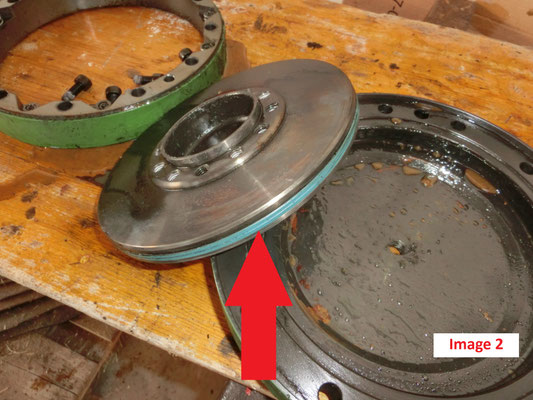
Inside this "hydraulic cylinder" is a turquoise sealing ring, the plastic of which cannot withstand this enormous heat stress over time.
The plastic slowly hardens, and a very slight oil leak occurs. This oil then slowly seeps onto the friction pads, which subsequently can no longer transmit the torque generated by the diesel engine: The machine fails!
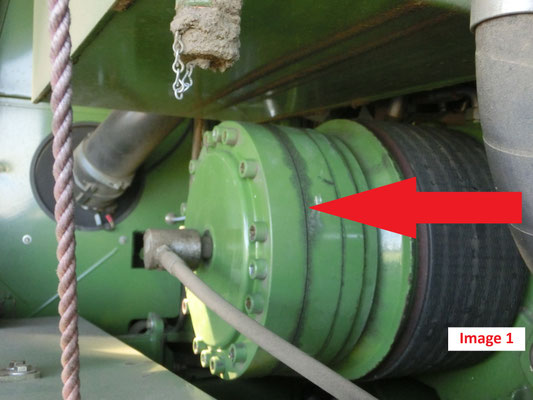
In "Image 1" below, a light film of oil is already visible on the clutch. This clutch is about to fail!
Images 2 and 3 show the cause of this leak: the hardened sealing ring!
Up to approximately 700 hp, the old clutch can still withstand the temperatures encountered.
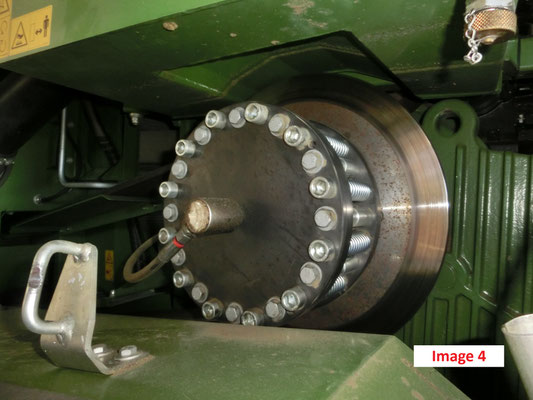
At higher power levels, converting to the new clutch shown in "Image 4" is advisable.

Broken manifold bolts on the V12-MAN
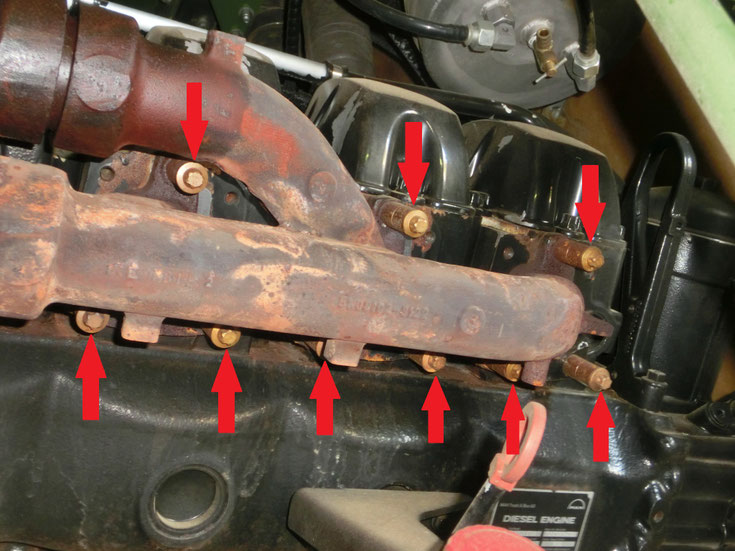
There have been repeated reports of exhaust manifold bolts sporadically breaking off on V12 MAN engines, especially on the side of the engine facing away from the radiator.
This is technically quite explainable: While the side of the engine facing the radiator is exposed to a constant, slight draft, a significant heat build-up occurs on the opposite side.
Since this problem with the bolts has occurred several times on a BigX 1100, operating in Bavaria, the owner has now reduced the tightening torque for these manifold bolts: MAN specifies a factory tightening torque of 60 Nm + 90°. On the aforementioned engine, the tightening torque was experimentally reduced to
85 Nm + 0°, which has worked perfectly for the past year and a half.
The problem appears to be solved, or at least significantly reduced.
Fire hazard due to inadequate cleanliness
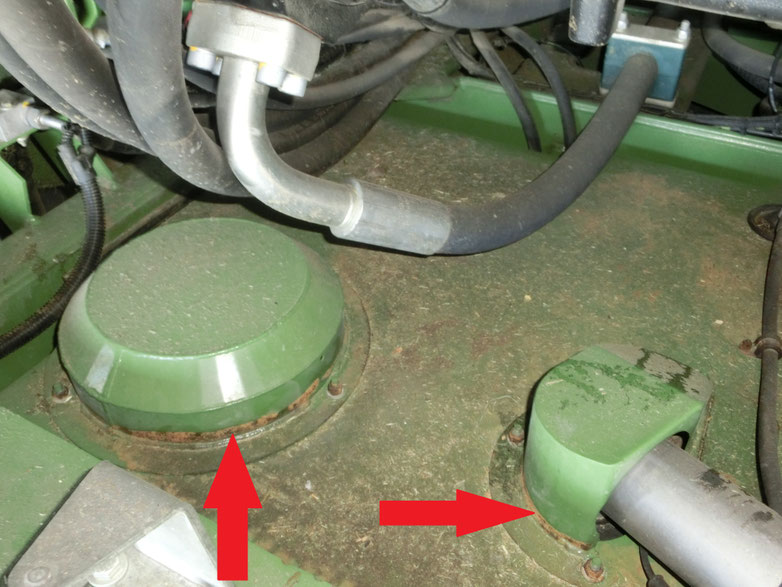
After finishing work, a BigX 1100 was brought home and parked in its garage.
A short time later, the driver noticed a burning smell in the air. The cause was quickly found: Since the 2010s, Krone forage harvesters have had a metal plate installed above the fuel tank to protect it from falling crop material and potentially hot steel parts (see the above discussion about the manifold bolts).
In this particular case, very dry grass had accumulated on this plate and begun to smolder. The first signs of burns on the paintwork were already visible (see photo).
Keep your machines clean to avoid such problems! This applies to all forage harvesters!